
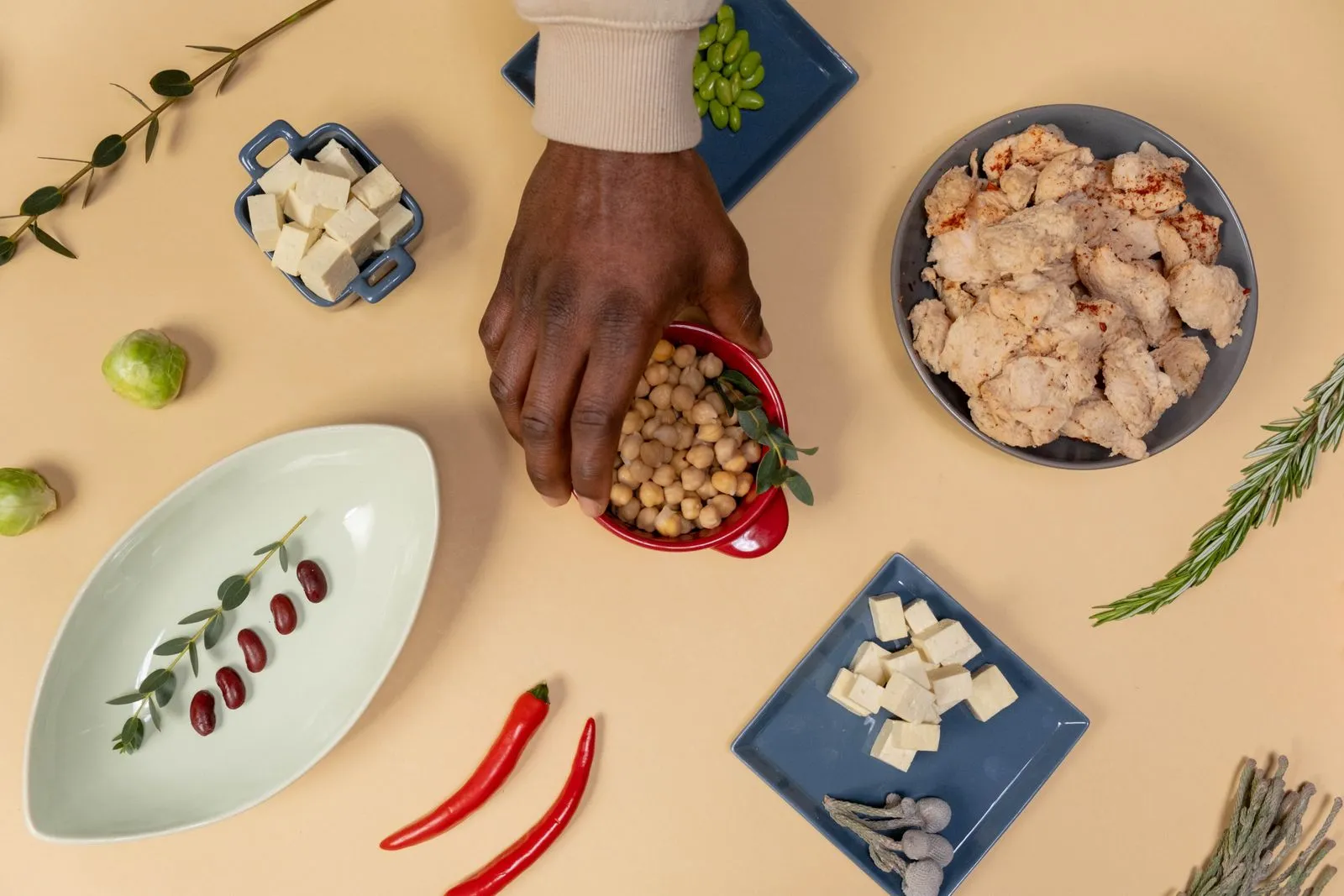
A satisfying vegan meal needs more than a pile of vegetables. Build your plate with a substantial protein, plenty of colorful produce, and a hearty side that brings energy and texture. Then add a flavorful sauce or topping to tie it all together. This flexible approach works for weeknight dinners, packed lunches, and soul food favorites. Use the portions and ingredients below as a starting point, and adjust them to your appetite and preferences.
Start With Plant Protein
Choose a protein to anchor the meal: beans, lentils, tofu, tempeh, seitan, or peas are practical options. For example, pair black-eyed peas with greens, or add baked tofu to a bowl of roasted vegetables. If you use a packaged meat alternative, check its label for ingredients and sodium so you can balance the rest of the plate accordingly.
Make protein easy to include by preparing a batch ahead. Cook beans or lentils, bake tofu, or season and roast chickpeas. Store them separately from sauces and crisp vegetables, then add a portion when assembling a meal. A mix of protein sources across your meals also helps keep the menu varied in flavor and texture.
Add Color and Vegetables
Fill a generous part of your plate with vegetables, using a mix of colors and cooking methods. Try sautéed collard greens with roasted squash, or crunchy cabbage slaw beside braised beans. Fresh, frozen, and canned vegetables can all work; choose what fits your schedule, and rinse canned vegetables when you want to reduce excess salt.
Balance textures to keep each bite interesting. Pair tender greens or roasted vegetables with something crisp, such as raw peppers, shredded cabbage, or sliced cucumber. Season vegetables with herbs, spices, citrus, vinegar, or a little cooking oil. Strong seasoning helps a simple plate feel complete without relying on heavy sauces.
Choose a Hearty Side
Add a satisfying source of carbohydrates, such as brown rice, corn, potatoes, whole-grain bread, grits, or sweet potatoes. These sides bring substance and pair well with beans and vegetables. For a soul food-inspired plate, serve seasoned rice with peas and greens, or add baked sweet potato alongside tofu and slaw.
Use your appetite and activity level to decide how much of each component to serve. If the meal feels too light, add another scoop of beans, rice, or potatoes. If you want a lighter plate, increase the vegetables while keeping a clear protein portion. There is no single portion size that suits everyone.
Finish With Flavor
A sauce, dip, or topping can bring the components together. Try a tangy vinaigrette, salsa, seasoned tahini, or a smoky tomato sauce. Add chopped herbs, toasted seeds, pickled onions, or a squeeze of lemon for extra flavor and texture. Keep sauces on the side when packing lunch so vegetables and grains do not become soggy.
Think of the plate as a simple formula: protein, vegetables, a hearty side, and a flavorful finish. Swap ingredients based on what you have, while keeping each role in mind. If you are eating out, look for a meal that includes a substantial plant protein and ask which vegetables or sides can complete the plate.
A filling vegan plate comes together when protein, vegetables, and a hearty side each have a place. Use the formula as a guide, then adjust portions, seasonings, and textures to suit your meal. For a ready-made vegan soul food option in Hobart, stop by Southern Roots and explore the menu.